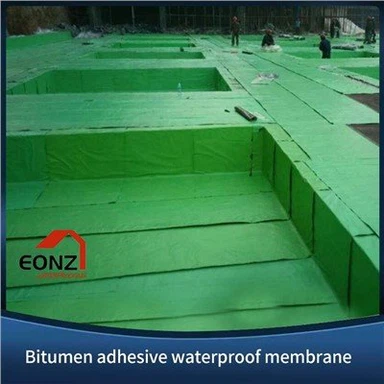
The Right Material in The Right Place!
Jun 24, 2022
Different building parts have different requirements for waterproof materials. Each material has its own strengths and weaknesses. One material cannot be used all over the world, and there is no good material for use anywhere. Various materials can only complement each other, not replace them, and each has its place. Roof waterproofing and basement waterproofing require different material properties, while bathroom waterproofing and wall waterproofing are more different.
1 Material selection for building parts
roof waterproofing
The roof waterproof layer is exposed to nature, exposed to hot sunlight, gusty wind, eroded by rain and snow, tormented by severe cold and heat, and repeated expansion and contraction of the temperature difference between day and night. There is no good material properties and good protection measures. Difficult to achieve the required durability. Therefore, waterproof materials with high tensile strength, large elongation and good aging resistance should be selected. Such as polyester tire polymer modified asphalt membrane, EPDM rubber membrane, P-type PVC membrane (welded joint), one-component polyurethane coating (plus protective layer). The various roof designs will be discussed in detail later.
wall waterproofing
The reason why the wall leaks is because the wall is too thin now, mostly light block masonry, with a large number of internal and external joints, and the joints between the doors and windows and the wall are not tightly sealed, and rainwater seeps through the joints. The waterproofing of the wall cannot be made of coils, but only coatings, which are combined with exterior decoration materials. Only sealing compound can solve the problem of window sill installation seam.
Underground building waterproofing
The underground waterproof layer has been immersed in water or very humid soil for many years, and the waterproof material must have good water resistance. The membrane made of perishable carcass cannot be used, and the waterproof layer of the bottom plate should be thick and waterproof material with a certain resistance to puncture. It is best to laminate 6mm~8mm thick. If a synthetic polymer coil is used, it is best to heat the seam. For those who use adhesive to seam, the adhesive should have excellent water resistance, otherwise the best coil cannot be used. The use of waterproof coatings should be done with caution. The thickness is 2.5mm when used alone, and 2mm when combined with the coil.
toilet
There are three characteristics of waterproofing in toilets and bathrooms. First, it is not affected by the natural climate, the temperature does not change much, and the elongation rate of the material is not high; second, the area is small, there are many yin and yang angles, and there are many pipes passing through the floor; The binding agent has good affinity. According to the above three characteristics, the coil material cannot be used, only the coating is the most suitable, and the cement-based acrylic coating is the most suitable for the coating, which can firmly stick the tiles on it.
landfill
Polyethylene geomembrane is the best waterproof material for landfills, lakes, ponds and ditches planting roofs, with a width of more than 5m, welded joints, and good puncture resistance.
Overpass waterproofing
There are more and more overpass projects in urban construction, and reinforced concrete beams and slabs must be waterproof to prolong their service life. Because the high-temperature asphalt concrete pavement is laid on the waterproof layer, the waterproof layer should be resistant to a high temperature of 110 °C. Choose APP confession asphalt coating or APP modified asphalt coil.
Cave house waterproofing
The waterproofing technology of the cave is complicated, and there are rock caves and loess caves. There are two types of off-wall lining and on-wall lining in rock caves. Rocky Dongting Lake wall-mounted lining. After spraying the concrete, apply a cement mortar leveling layer on its surface, and then stick a polymer modified asphalt membrane or a polyethylene geomembrane, or a PVC waterproof membrane. Rock cavity off-wall lining, spraying waterproof coating, polyurethane coating or neoprene latex asphalt coating on the shotcrete surface. Loess caves are mostly lined with blocks for internal waterproofing. Apply polymer waterproof mortar or acrylic paint on the surface of cement mortar.
2 Material selection for building functional requirements
1. The roof is used for landscaping to beautify the urban environment. Cover the waterproof layer with planting soil to plant flowers and trees. The plant root system has strong puncture resistance, and the waterproof layer must have puncture resistance in addition to corrosion resistance and soaking resistance. Use polyethylene geomembrane (welded joints), PVC membranes (welded joints), lead-tin alloy membranes, and modified asphalt membranes with anti-rooting.
2. The roof is used for entertainment activities and industrial venues, such as dance fields, small ball sports fields, tea houses, drying fields, sightseeing platforms, etc., and a block protective layer should be laid on the waterproof layer. The waterproof material does not have to be fully sticky. The elongation of the coil is not high, and a variety of coatings can be used, and it can also be used as a composite waterproofing combination of rigidity and flexibility.
3. The inverted roof is a method in which the thermal insulation layer is on the top and the waterproof layer is on the bottom. The insulation layer protects the waterproof layer from the sun, but also from the attack of heavy rain and wind and the torture of severe winter and heat. The waterproof material selected is very wide, but the construction must be meticulous and meticulous to ensure that there is no leakage within the service life. If leakage occurs, it is very difficult to repair seepage and plugging, and it is often necessary to turn over the insulation layer and the repression layer, causing difficulties and waste.
4. The water storage level is very similar to a pool, but the water is shallow, generally no more than 25mm. The waterproof layer is immersed in water for many years, and the waterproof material is required to have good water resistance. Polyurethane coatings, silicone rubber coatings, Quansheng polymer coils (thermally welded joints), polyethylene geomembranes, lead-tin metal coils, and coils that are not suitable for adhesive bonding can be selected.
3 Engineering conditions require material selection
1. The building grade is the primary condition for selecting materials. First- and second-level buildings must use high-quality waterproof materials, such as polyester tire polymer modified asphalt membranes, synthetic polymer membranes, and composite synthetic polymer coatings.
2. Tiles for sloping roofs. Clay tiles, asphalt linoleum tiles, concrete tiles, metal tiles, wooden tiles, slate tiles, bamboo tiles, and tiles must have a flexible waterproof layer underneath. Because there are fixed tile nails passing through the waterproof layer, the waterproof layer is required to have the ability to hold the nails to prevent rainwater from penetrating into the lookout board along the nails. The most suitable membrane is 4mm thick polymer modified bitumen membrane. Polymer coils and coatings are not suitable.
3. Roofs with large vibration, such as near railways, earthquake areas, and workshops with crane forging hammers and large-span light-weight roof trusses. The vibration is large, the mortar base is easily cracked, and the sticky coil is pulled off. Coils or coatings with high elongation and high strength should be used, such as EPDM rubber coils, polyester tire polymer-modified asphalt coils, and PVC coils, and they should be paved in daytime or spot-bonded construction.
4. For steep-slope roofs that cannot be used by people, because the slope is very large, which can reach more than 60 °C, and the waterproof layer cannot be used as a block protective layer, then only the coils with mineral particles are selected, or the coils covered with aluminum foil, Metal coil.
4 Choice of climatic conditions
1. my country has a vast territory, and the temperature between the north and the south is very different. The temperature in the south of the Yangtze River reaches more than 40 degrees in summer and lasts for several days. Exposure to the waterproof layer of the roof and prolonged exposure to the sun will prematurely promote the waterproof function. The selected materials should be UV-resistant and have a high softening point, such as APP-modified asphalt coils, EPDM rubber coils, and polyvinyl chloride coils.
2. It is rainy in the south, snowy in the north, and dry in the west. About 15 provinces, municipalities and autonomous regions with an annual rainfall of more than 1000mm, the roof is always wet for 200 days of continuous rainy days, the drainage is not smooth and the water accumulates, and it does not dry for several months, soaking the waterproof layer. Coatings with poor water resistance are prone to re-emulsification or hydration reduction reaction; adhesives that are not resistant to blisters will seriously reduce the bonding strength and cause cracking of the polymer coils that bond the joints, especially the gutters with internal drainage. I was leaking due to long standing water immersion. For this purpose, water-resistant materials, such as glass fiber tires, modified asphalt coils with polyester tires, or water-resistant adhesive-bonded polymer coils should be selected.
3. In the arid and less rainy northwest region, the evaporation is much greater than the rainfall, and the eaves water is often not seen after the rain. Obviously, the degree of waterproofing in these areas has been reduced. A fortification of secondary buildings can also meet the waterproofing requirements. If a protective layer is made, it can reach the service life.
4. In severe cold and snowy areas, some waterproof materials cannot withstand the cyclic changes of low temperature frost heave shrinkage, premature aging and fracture. Four or five months of the year are covered with white snow, and the snow water will impregnate the waterproof layer for a long time. At the same time, the snow melts and freezes. In these areas, SBS modified bitumen membranes or polymer membranes with welded joints should be used. If waterproof materials that are not resistant to low temperature are used, they should be used as inverted roofs.
5. The waterproof construction season cannot be ignored. In the early spring of North China, it is also very cold, so water-soluble coatings cannot be used. Adhesives will reduce the bonding performance at 5 °C, and they cannot be applied at subzero temperatures. The design is summer, and the construction is three-nine. The adhesive freezes when it meets the concrete and loses its adhesion. The joints of the coils could not stick, resulting in construction failure, delaying the construction period, and tuition and miscellaneous materials. In the northeast summer, it is possible to construct waterproof materials that are afraid of cold, but in the severe cold winter, these completed waterproof layers cannot withstand the ravages of frost heave and contraction, and they fail prematurely. When designing, attention should be paid to understanding the suitable temperature of the selected materials.